
Why Side by Side Repair Skills Save Time and Money
Side by side repair doesn’t always require a trip to the dealership. Many common maintenance tasks and minor fixes can be handled right in your own garage with basic tools and a little know-how.
Quick Answer: What You Can Fix Yourself vs. What Needs a Pro
DIY-Friendly Tasks:
- Oil and filter changes
- Air filter cleaning and replacement
- Tire repairs (plugs for punctures)
- Spark plug replacement
- Battery maintenance
- Basic fluid level checks
- Drive belt inspection
- Light bulb replacement
Professional Service Required:
- Engine rebuilds or major internal work
- Transmission repairs
- Complex electrical diagnostics
- Suspension overhauls
- Frame damage or welding
- Warranty-covered repairs
All vehicles need regular maintenance to run optimally, and powersport vehicles like side-by-sides are no exception. The difference between a machine that lasts for years and one that leaves you stranded on the trail often comes down to preventative care.
Understanding what you can tackle yourself saves money and keeps your UTV ready for adventure. But equally important is knowing when a repair requires the specialized tools, diagnostic equipment, and factory training that certified technicians bring to the table.
Whether you ride a Can-Am, Polaris, Yamaha, Honda, or Kawasaki, the basics of side-by-side maintenance follow similar principles. Your owner’s manual is your best friend—it contains specific maintenance schedules, torque specifications, and fluid requirements for your exact model.
This guide walks you through the repairs and maintenance you can confidently handle at home, while helping you recognize when it’s time to call in the professionals at 395 Motorsports.
Your DIY Toolkit and Safety Essentials
Before diving into side by side repair, preparation is key. A well-stocked toolkit and a focus on safety will make your maintenance tasks smoother and safer.

A basic side-by-side maintenance kit should include:
- Owner’s Manual: Your most important tool. It has model-specific maintenance schedules, torque specs, fluid types, and part numbers.
- Wrenches & Socket Set: Metric and standard sizes.
- Torque Wrench: Crucial for tightening fasteners to the correct specification.
- Tire Care: Tire pressure gauge, plug kit, and a portable air compressor.
- General Tools: Screwdrivers, various pliers, and a funnel.
- Electrical Tools: A multimeter for basic troubleshooting.
- Lubrication: Grease gun for moving parts.
Understanding Your Vehicle’s Needs
Every side-by-side is unique. Your owner’s manual is the ultimate resource, detailing the maintenance schedule based on hours and conditions. For instance, dusty conditions require more frequent air filter checks. The manual also specifies the correct type and quantity of engine oil, coolant, and other fluids. Using the wrong fluid can cause costly damage, and correct torque specs prevent stripped or loose bolts. Always reference your manual for brand-specific details, whether you own a Polaris, Can-Am, or Yamaha.
Safety First: Gearing Up for Repair
Safety is your top priority. For comprehensive safety information, consider resources from the Recreational Off-Highway Vehicle Association (ROHVA). Always use personal protective equipment (PPE).
Here’s a quick safety checklist:
- PPE: Wear safety glasses and gloves.
- Stable Work Area: Work on level ground. If lifting the vehicle, use jack stands—never rely on a jack alone.
- Ventilation: Ensure good airflow, especially when working with chemicals or running the engine.
- Fire Safety: Keep a fire extinguisher nearby.
- Cleanliness: Keep your work area clean to prevent contaminants from entering sensitive components like the engine or transmission during fluid changes.
A little caution goes a long way in preventing accidents and ensuring your side by side repair efforts are successful.
Routine Maintenance You Can Do at Home
Regular maintenance is the cornerstone of your side-by-side’s longevity and performance. Think of it as a health check-up for your machine. By consistently performing these routine tasks, you can catch minor issues before they become major headaches, saving you time and money.

The most common maintenance needs involve keeping everything clean, lubricated, and properly adjusted. These preventative measures are crucial, as all vehicles need regular maintenance to run optimally, and powersport vehicles are no exception.
Fluid Checks and Changes
Fluids are the lifeblood of your side-by-side. Regularly checking and changing them is one of the most impactful maintenance tasks you can perform.
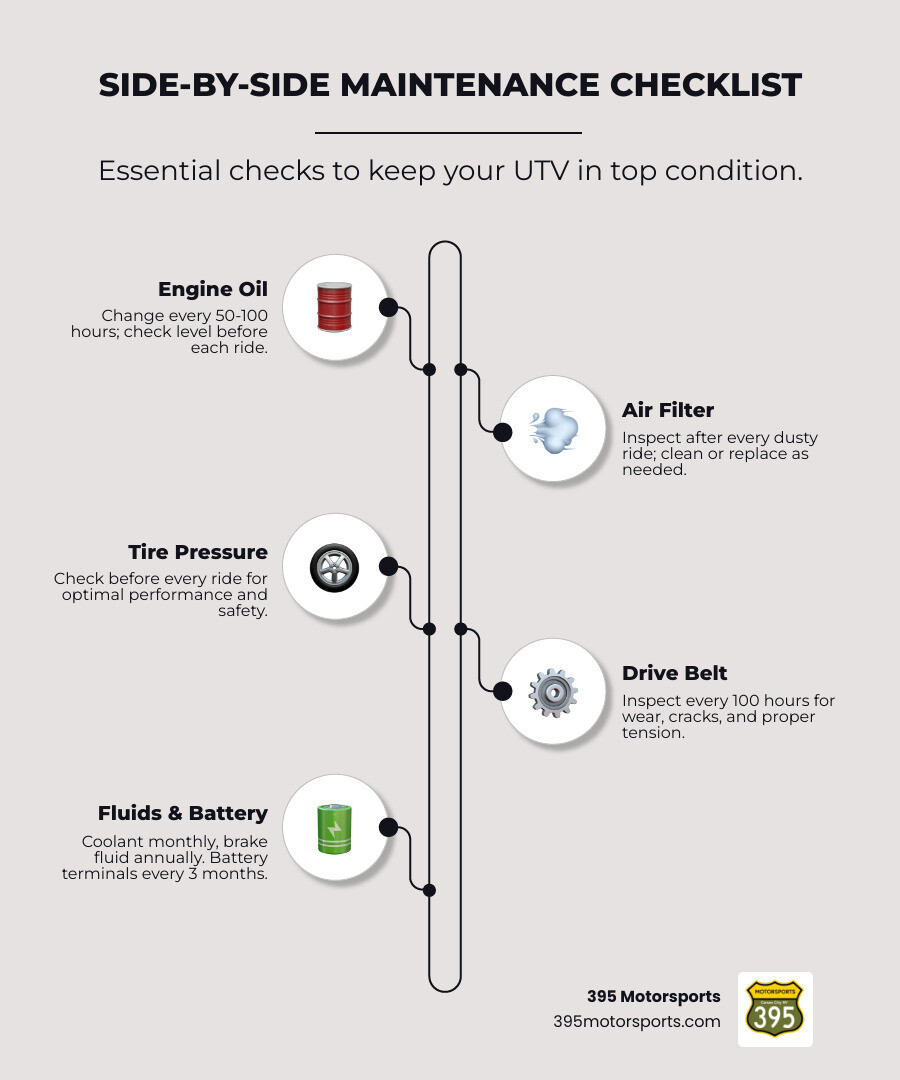
- Engine Oil and Filter: This is the most critical task. Oil lubricates, cools, and cleans the engine. Follow your owner’s manual for the correct oil, filter, and change interval (typically 50-100 hours or annually).
- Coolant: Check the reservoir level to prevent overheating. If it’s consistently low, you may have a leak that needs professional attention.
- Brake Fluid: Check the reservoir level. Low or dark, murky fluid can indicate worn pads or a need for a fluid flush, which we can assist with.
- Differential and Transmission Fluid: These fluids are crucial for drivetrain longevity. Check your manual for the specific fluid types and change intervals for your model’s front/rear differentials and transmission.
Filters, Belts, and Battery Care
Beyond fluids, several other components require regular attention.
- Air Filter: This protects your engine from dust, which is especially critical in Northern Nevada. Inspect it after every dusty ride. Clean or replace a dirty filter to maintain performance and fuel efficiency.
- CVT Belt: On automatic models, inspect the CVT belt for cracks, fraying, or wear. A worn belt can slip or break, leaving you stranded. Your manual provides inspection and replacement guidance.
- Battery: Keep terminals clean of corrosion using a wire brush. Check the voltage with a multimeter (a healthy 12V battery should be ~12.6V or higher). Use a trickle charger during long-term storage to maintain battery health.
Staying on top of these tasks contributes to the longevity and performance of your side-by-side, ensuring it’s ready for your next adventure in Carson City, Reno, or Lake Tahoe.
A Guide to Common DIY Side by Side Repair
While complex engine or transmission work is best left to certified technicians, many common side by side repair issues can be handled at home. Learning to troubleshoot and fix minor problems saves money and empowers you as an owner. Common issues often revolve around tires, basic electrical components, and spark plugs.
Basic Side by Side Repair: The Essentials
These are some of the most frequent repairs that are well within the scope of a home mechanic.
- Tire Repair (Puncture Plugs): A flat tire is a common trailside issue. For small punctures in the tread, a tire plug kit is invaluable.
- Step-by-step guidance:
- Locate the puncture and remove the object with pliers.
- Use the reamer tool to clean and prep the hole.
- Thread a rubber plug into the insertion tool.
- Force the tool with the plug into the hole, leaving about half an inch of the plug outside.
- Pull the tool straight out, leaving the plug in place.
- Trim the excess plug material and inflate the tire to the recommended pressure.
- Check for leaks with soapy water.
While this is a great trailside fix, we recommend professional tire repair for a more permanent solution, especially for larger punctures or sidewall damage.
- Step-by-step guidance:
- Spark Plug Replacement: Worn or fouled spark plugs can cause misfires, reduced power, or hard starting. Consult your manual for the correct plug type and gap. Carefully remove the old plug with a spark plug socket, install the new one (hand-tighten first, then use a torque wrench), and reattach the wire/boot.
- Headlight Bulb Change: This is usually a simple fix. Your owner’s manual will show you how to access the bulb housing to replace a burnt-out bulb.
- Fuse Replacement: If an electrical accessory stops working, check the fuse box. Identify the blown fuse and replace it with a new one of the exact same amperage. Using a higher-rated fuse is a fire hazard.
Advanced Side by Side Repair: Tackling Bigger Jobs
These repairs require more mechanical aptitude but are still manageable for a determined DIYer.
- Brake Pad Inspection and Replacement: Regularly inspect brake pads for wear. If they are thin (check your manual for minimum thickness) or you hear grinding, it’s time for replacement. This involves removing the wheel and caliper to swap the pads.
- CV Boot Inspection: The rubber CV boots protect your axle joints. Inspect them for cracks or tears. A damaged boot can lead to expensive joint failure. Catching a tear early can save you a major repair.
- Minor Electrical Troubleshooting: A multimeter can help you check for continuity in wires, test switches, and diagnose simple voltage issues, pinpointing why an accessory isn’t working.
- Winch Maintenance: If you have a winch, check the cable for fraying, lubricate moving parts, and ensure electrical connections are clean and tight.
Mastering these side by side repair tasks will give you confidence and keep your machine running smoothly for adventures across Northern Nevada.
Know Your Limits: When to Call a Professional
While it’s empowering to handle your own side by side repair, knowing your limits is crucial for your safety and the longevity of your machine. When you encounter warning signs like strange noises, significant performance loss, or complex system failures, it’s time to call a professional. Our licensed technicians at 395 Motorsports are trained to handle the jobs that require specialized tools and factory training.
| DIY-Friendly Tasks (Home Mechanic) | Professional Service (395 Motorsports) |
|---|---|
| Oil/Filter Change | Engine Rebuild / Major Internal Work |
| Tire Puncture Plug | Transmission Repair / Rebuild |
| Air Filter Cleaning/Replacement | Complex Electrical Diagnostics |
| Spark Plug Replacement | Suspension Overhauls |
| Battery Maintenance | Frame Straightening / Welding |
| Headlight/Fuse Replacement | ABS/EFI System Diagnostics |
| Basic Lubrication | Drive Train Component Replacement |
| Minor Accessory Installation | Warranty-Covered Repairs |
Recognizing Serious Warning Signs
Your side-by-side will often tell you when something is seriously wrong. Stop riding and seek professional help if you notice:
- Engine Noises: Knocking or grinding sounds often indicate serious internal problems requiring a professional diagnosis.
- Significant Fluid Leaks: Major leaks of oil, coolant, or fuel need immediate attention. A brake fluid leak is a critical safety hazard.
- Brake Problems: Spongy, unresponsive, or grabbing brakes mean the vehicle is unsafe to ride.
- Transmission Issues: Difficulty shifting, slipping gears, or grinding noises point to internal damage that requires a specialist.
- Major Performance Loss: If your machine runs poorly, backfires, or is hard to start, it could signal deeper engine or fuel system issues that need expert diagnosis.
- Frame Damage: Any bent or cracked frame compromises structural integrity and requires professional welding and repair.
- Complex Electrical Faults: Intermittent electrical problems, sensor failures, or ECU issues require advanced diagnostic tools.
The Value of a Certified Technician
When you bring your side-by-side to 395 Motorsports for service, you’re investing in peace of mind. Certified technicians offer:
- Specialized Tools: We have manufacturer-specific diagnostic equipment to accurately pinpoint issues, saving time and guesswork.
- Factory Training: Our technicians receive continuous training from brands like Polaris, Can-Am, and Yamaha, ensuring they are experts on your specific model. This is vital for engine overhauls, suspension rebuilds, and complex electrical work.
- Warranty Repairs: Attempting major repairs yourself can void your warranty. As a full-line warranty dealer, we perform these repairs correctly while keeping your warranty intact.
- Quality and Efficiency: We use genuine OEM parts and our experience means we can get you back on the trails faster with a reliable repair.
Trusting 395 Motorsports means your side-by-side is in capable hands, ready for the landscapes of Northern Nevada, from Carson City to Lake Tahoe.
Frequently Asked Questions about Side-by-Side Maintenance
We hear a lot of great questions from our customers about keeping their side-by-sides in top shape. Here are some of the most common ones to help with your side by side repair and maintenance journey.
How often should I change the oil in my side-by-side?
The ideal oil change frequency depends on three factors:
- Owner’s Manual: This is your primary guide. It specifies intervals based on riding hours (e.g., every 50-100 hours) or time (e.g., annually), whichever comes first.
- Riding Conditions: Frequent riding in harsh conditions (dust, mud, high RPMs) requires more frequent oil changes than casual use.
- Oil Type: Use the manufacturer-recommended oil (conventional, synthetic blend, or full synthetic). While synthetics can offer better protection, always follow the manual’s interval recommendations.
Proactive oil and filter changes are key to maintaining vehicle performance. It’s always better to change it a little early than too late.
What are the most important things to check before every ride?
A quick pre-ride inspection prevents breakdowns and ensures safety. We recommend a simple “T-CLOC” check:
- Tires and Wheels: Check pressure and inspect for damage. Ensure lug nuts are tight.
- Controls and Cables: Verify smooth operation of the throttle, brakes, and steering.
- Lights and Electrics: Test all lights, the horn, and any accessories.
- Oil and Fluids: Quickly check engine oil, coolant, and brake fluid levels. Look for leaks.
- Chassis and Suspension: Visually inspect the frame, suspension, and axles for damage or loose bolts.
This routine helps ensure your machine is ready for the trails around Carson City or Lake Tahoe.
Can I use car oil in my side-by-side?
We strongly recommend against it. Powersport-specific oils are formulated for the unique demands of side-by-side engines, which often run at higher RPMs and temperatures. Many models have a wet clutch system that shares engine oil; car oils contain friction modifiers that can cause the clutch to slip and wear out prematurely. Always use the oil type and viscosity specified in your owner’s manual to avoid engine damage and protect your warranty.
Keep Your Adventure Going Strong
We hope this guide has empowered you with the knowledge and confidence to tackle many common side by side repair and maintenance tasks right at home. Embracing DIY maintenance offers numerous benefits, from saving money on labor costs to gaining a deeper understanding of your machine. Regular preventative care is the single best way to ensure your side-by-side enjoys a long life of optimal performance, ready for every adventure across Northern Nevada.
However, as we’ve discussed, knowing your limits is just as important as knowing how to fix things. When faced with complex issues, serious warning signs, or repairs requiring specialized tools and factory training, don’t hesitate to seek professional service. Our team of certified technicians at 395 Motorsports is dedicated to keeping your powersports vehicle in top shape, providing expert care for everything from engine overhauls to complex diagnostics.
We’re here to help you keep your investment in pristine condition, ensuring you can continue to explore the trails around Carson City, Reno, and Lake Tahoe with confidence and peace of mind.
Schedule your next service appointment with our expert technicians